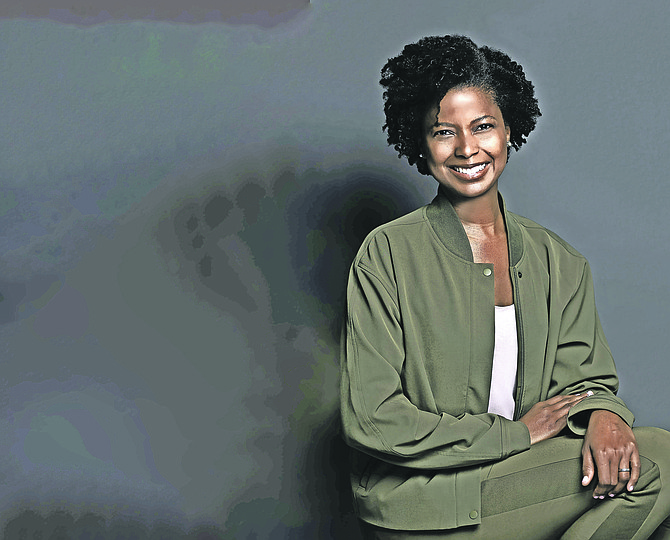
Dr DeVonnia Bonimy-Lee
By Alesha Cadet
Tribune Features Reporter
acadet@tribunemedia.net
FOR nearly two decades, Dr DeVonnia Bonimy-Lee has been one of the quiet powerhouses shaping women’s wellness in the Bahamas. With a Doctorate in Physical Therapy, board certification as a Women’s Health Clinical Specialist and additional certifications in lymphoedema, cosmetic surgery therapy and yoga, her career reflects a rare blend of clinical expertise, compassion and advocacy.
As the founder of Viva Physio & Wellness in Sandyport, she is championing a vital message for Bahamian women: pelvic health is not optional, and recovery after childbirth deserves proper clinical care.
Her journey began at The College of The Bahamas before completing a Bachelor of Science in Biology at North Georgia College & State University. She then pursued a four-year Doctorate in Physical Therapy at Seton Hall University. “My first job out of PT school was the inpatient setting at the prestigious Memorial Sloan Kettering Cancer Center in New York. Here is where I learned firsthand about continuity of care, collaborative effort and multi-disciplinary care in action,” said Dr Bonimy-Lee.
It was in that deeply specialised environment that she met “Mila”, an expectant mother fighting an aggressive tumour. “As a new graduate in this unique setting, I learned about how my skills as a Physiotherapist was an integral part of her success and was inspired when she met her goal,” she said. Dr Bonimy-Lee's early clinical exposure, combined with specialised training in pelvic health, lymphoedema and oncology rehabilitation, made her increasingly aware of how often pelvic and core-related challenges were misunderstood, dismissed or left untreated.
Dr Bonimy-Lee’s passion deepened when she transitioned to NYU Langone Medical Center in New York City. “This experience allowed me to work with a network of medical providers who referred patients to Physiotherapy at various stages of their pregnancy,” she said. The stories stayed with her, including that of “Rhonda”, a mother struggling with nocturia and scar restrictions after her c-sections. “I completed a full postpartum assessment at 14 weeks postpartum, addressed her deficits over the course of six weekly visits and she was able to work part-time from home, and continue to care for her newborn and 4-year-old, with support from her benefits,” said Dr Bonimy-Lee.
She noted that many women skip treatment because it requires out-of-pocket payment, even though early intervention can prevent long-term issues.
“Postpartum pelvic-floor rehabilitation can start with education as early as the day after delivery,” she explained. Traditionally, local women begin formal follow-up at six weeks, making this an ideal time to address how childbirth and gravity shift the body and how the pelvic floor muscles lengthen to three times their normal length. She noted that many women later in life tell her, “I wish I had met you right after I gave birth.”
Her clinical insights also highlight the prevalence of untreated symptoms. “One of four women will have pelvic floor dysfunction. Postnatal pelvic floor rehabilitation and education ideally should occur after each delivery,” she added.
One persistent challenge is misinformation. “One of the biggest misconceptions I encounter is that pelvic issues following childbirth are ‘normal’ and it’s just something mothers learn to live with,” she said. Dr Bonimy-Lee noted that many women are also navigating hypertension, diabetes and obesity before pregnancy, which can complicate recovery timelines. Her work on national rehabilitation assessments revealed how limited human resources and public awareness affect access to care.
Founding Viva Physio & Wellness allowed her to create the space she envisioned. “I wanted to create a dedicated space where evidence-based physiotherapy could be delivered in a supportive, restorative environment,” she said. Her aim has always been to empower women to restore strength and confidence.
She believes integrating pelvic health into maternity benefits is essential. “Integrating pelvic health rehabilitation into maternity benefits is really about redefining what true postpartum care means,” she said. Dr Bonimy-Lee recommends insurers adopt policies that include postpartum pelvic assessments at six weeks, followed by therapeutic sessions if dysfunction is present. “When we support women through every stage of recovery, we strengthen families and the broader economy,” she said.
Looking forward, Dr Bonimy-Lee sees education as the national turning point. “The next phase of progress lies in education, community connection and system-wide awareness,” she said. Through her involvement with the American Physical Therapy Association’s Pregnancy and Postpartum Special Interest Group, she recently helped develop educational tools for medical students and clinicians. She hopes similar efforts will flourish locally.
“At the community level, I hope for more public workshops, workplace wellness partnerships and postpartum support programmes,” she added. As her clinic grows, so does her mission: “When women are informed and supported, they heal better and live fuller lives,” she said.
Readers are encouraged to keep up with Dr Bonimy-Lee’s work at https://vivaptwellness.com




Comments
Use the comment form below to begin a discussion about this content.
Sign in to comment
OpenID