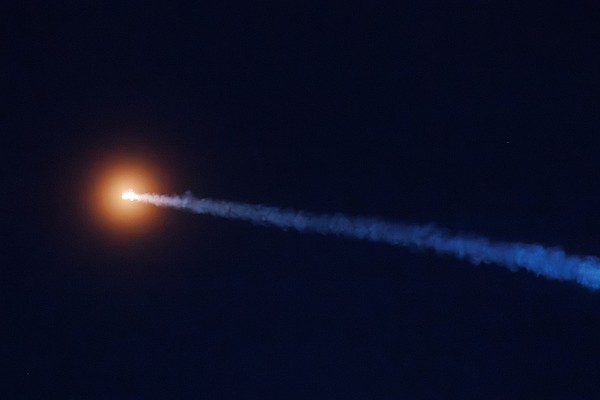
A SpaceX Falcon 9 rocket booster seen from Cape Eleuthera during an event to mark the first landing of a SpaceX Falcon 9 rocket booster on a drone ship off of Eleuthera on February 18, 2025. Photo: Dante Carrer/Tribune Staff
By AVA TURNQUEST
Tribune Digital Editor
aturnquest@tribunemedia.net
A LOUD sonic boom is expected to be heard across parts of The Bahamas tomorrow evening as part of a scheduled and controlled SpaceX Falcon 9 operation, after the landing was pushed back by one day.
The Falcon 9 booster landing in the Exuma Sound is now set for February 19, 2026, between 5pm and 9.30pm. The activity had previously been scheduled for February 18.
In an updated notice issued today, the Civil Aviation Authority of The Bahamas said it has approved the planned landing in coordination with all relevant national regulatory agencies.
“The Civil Aviation Authority of The Bahamas (CAA-B) advises the public that, in coordination with all relevant national regulatory agencies, it has approved the planned landing of a Falcon 9 vehicle operated by SpaceX in the Exuma Sound on February 19, 2026, between 5:00pm and 9:30pm,” the notice said.
The authority added that all requisite regulatory and environmental reviews and clearances have been completed in accordance with established aerospace safety and operational protocols.
Residents and visitors are being advised that, depending on weather and atmospheric conditions, one or more sonic booms may be heard during the landing sequence.
“The intensity and extent of these effects will vary based on environmental factors at the time of re-entry,” the notice said.
A public advisory issued earlier this week had warned residents to expect a possible sonic boom on February 18 as part of the scheduled Falcon 9 operation. That notice explained that while the sound may be loud and startling, it is not dangerous and no action is required.
The landing forms part of SpaceX’s booster recovery programme in Bahamian waters.
Department of Environmental Planning and Protection director Dr Rhianna Neely-Murphy previously confirmed that environmental clearance had been granted for the operation, though other regulatory approvals were still pending at the time.
SpaceX previously conducted a booster landing in the Exuma Sound last year. Subsequent landings were paused following fallout from a separate Starship explosion in March that scattered debris near Ragged Island.
An Environmental Impact Assessment released in September found the first Exuma Sound landing produced minimal environmental effects, though it recommended stronger monitoring of underwater noise and improved instrumentation for future missions.
SpaceX has said it intends to conduct additional recoveries at the Exuma Sound site once approvals are secured.




Comments
Use the comment form below to begin a discussion about this content.
Sign in to comment
OpenID