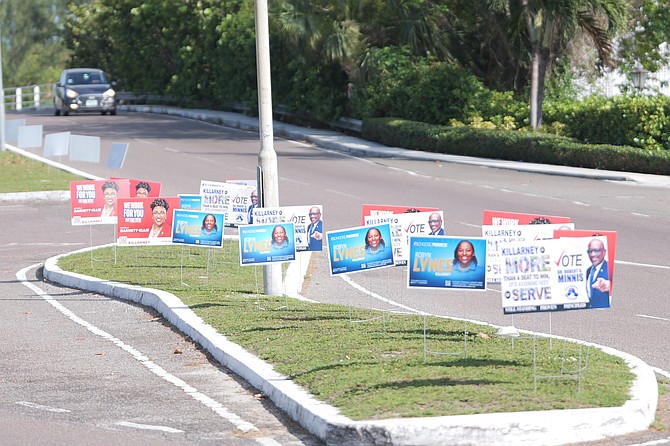
Political signs seen around New Providence on April 21, 2026. Photo: Chappell Whyms JR
By EARYEL BOWLEG
Tribune Staff Reporter
ebowleg@tribunemedia.net
AS campaign signs spread across the country ahead of the general election, environmental advocates are urging a broader debate about sustainability, warning that current practices contribute to waste and long-term environmental harm.
While it is unclear what materials local parties are using, campaign signs are often made from substances such as polypropylene, which do not fully break down in the environment.
Bahamian environmental scientist Dr Ancilleno Davis said the importation of large quantities of materials for short-term use carries environmental costs, including fossil fuel consumption and waste that lingers long after campaigns end.
“You will see that a lot of those signs, the metal stakes that go on the ground, they'll still be there sometimes for months afterwards or even sometimes you'll find them in remote areas like six months after,” he said.
“If they are picked up, they end up piling up inside the dump, where those things don't break down, but all the chemicals in them end up inside our groundwater, etc. It’s a high price to pay for this type of campaigning.”
Dr Davis also criticised the scale of campaign spending on signage, arguing that funds could be better directed toward long-term community projects, such as gardens, rather than toward temporary materials that create waste.
Dr Davis suggested political groups should rely less on posters and instead use a mix of outreach methods such as social media, radio and targeted publicity. He said campaigns should limit signage, use biodegradable or recyclable materials and consider long-term environmental impacts.
Nikita Shiel-Rolle, founder and CEO of the Cat Island Conservation Institute, said the issue should not be limited to posters alone but should form part of a wider discussion about how political campaigns engage with communities.
“I think that is a real conversation because is it necessary to have hundreds of signs, probably not, you know and so maybe it may lend to new campaigning regulations as far as dictating how far apart they can be,” she said.
“Those are sort of measures that could try and control. But we all know I think campaign season people are just paid to go put up signs so there isn’t much structure or intentionality other then ‘Get my face out there and make sure my community knows I’m here to represent them’.”
She said the more pressing issue is what happens to campaign materials after the election.
“I think as long as there is a plan as to what they're going to do with the signs, I think that's the most important thing,” she said. “I think that kind of goes back to even like the bigger environmental conversations that we have.”




Comments
bahamianson 1 month, 1 week ago
What broader debate? Aren’t we the intellectuals. Signs/billboards stay up months after the event has passed . Where are these clowns then? Every year we see huge signs up all around . The ministry that is responsible for permission or the permit should stipulate that a penalty must be paid if the said sign is not removed one week after the event. It should be no different with these political paraphernalia. Stop talking and start acting!!
JackArawak 1 month, 1 week ago
Posters are an extremely outdated method. Find a new way
Sign in to comment
OpenID