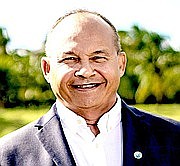
Mario Carey
A Bahamian businessman is calling for greater economic support for senior citizens, warning that rising healthcare, insurance and living costs are encouraging more Bahamians to spend their retirement years overseas.
Mario Carey, president and chief executive of Better Homes & Gardens Real Estate MCR Bahamas, said countries including Panama, Mexico, Costa Rica and Portugal are increasingly competing for retirees by offering lower living costs, healthcare benefits and discounts, while The Bahamas remains an expensive place for seniors to live.
“For the first time in our history, we are witnessing an exodus of Bahamian citizens and long-term residents who are finding that it is not better in The Bahamas when you get older,” said Mr Carey.
“They are exploring options and taking up residence in places like Panama, Mexico, Costa Rica and Portugal where the cost of living is lower and the benefits are greater.”
His comments come as the Government considers the Older Persons Rights, Protection and Care Bill 2026, proposed legislation that would divide responsibility for older persons between the Ministry of Social Services and the Ministry of Health and Wellness.
Mr Carey said the proposed legislation is a starting point but does not go far enough in addressing the financial pressures facing older Bahamians, particularly the cost and availability of health insurance.
“The Bill is a very basic starting point. It pays lip service to ideas like ‘motivated by a genuine concern’ but it does not address the economic realities including how hard it is for older people to maintain health insurance because the premiums keep climbing and the pension funds from National Insurance don’t begin to cover living expenses,” he said.
Mr Carey is also calling for changes to exchange-control rules that he said restrict Bahamians’ ability to purchase insurance overseas.
“We should not have exchange control over health insurance,” he said. “We should have the freedom and the right to purchase health or life insurance without interference from regulators. We can purchase an automobile, a TV set, send our children off to school abroad. Why are we not able to acquire insurance coverage if we can buy everything else we need where we want to? I would like to see that right added to the pending legislation.”
Mr Carey said the issue is becoming more pressing as older Bahamians face higher medical costs, rising insurance premiums and pension income that may not keep pace with their expenses.
“The older we get, the more our medical costs increase,” he said. “For many people, that becomes ever more difficult to afford. We see the challenges faced by our public healthcare facilities and the lengthy waiting times for patients, while we see what seems to be the ever rising costs of private healthcare.”
He said those pressures can leave retirees with few options once they stop earning employment income.
“Your NIB payment is hardly enough to cover anything, you don’t have your career or job revenue, your insurance rates skyrocket or you may be cancelled or not qualify if you are no longer employed,” said Mr Carey. “Meantime, your medical expenses increase, health insurance rates can climb so high you cannot even afford to maintain it. You are too old to borrow money from the bank so you are strapped.”
Mr Carey also pointed to accessibility as another challenge for older people, particularly those with mobility issues.
“We do not ensure that rules on accessibility are followed. Getting around with a cane or in a wheelchair is incredibly difficult with the lack of ramps and elevators,” he said.
The issue has been highlighted by the power outages experienced across New Providence this summer, which Mr Carey said have placed an additional burden on elderly residents with limited mobility or transportation.
“The power outages that have plagued The Bahamas this summer have been especially hard on the elderly, many of whom face mobility challenges,” he said. “Someone had the insensitivity to suggest that if the power is off, we all just go to the beach while too many have been left to sweat in the dark. What about the individual in a wheelchair, or those who have no transportation or extra money for a jitney? What about those people in the few senior homes we have? What are they supposed to do?”
Mr Carey said The Bahamas also needs to consider policies that would allow seniors to make greater use of the wealth they have accumulated in their homes.
He suggested allowing reverse mortgages, which would allow homeowners to access equity in their properties during retirement, with the outstanding amount repaid from the property after their death.
“At least, you can enjoy the part of your life you worked all those years to be able to afford – being able to travel, pursue a hobby, or cover your medical expenses,” he said.
Mr Carey said the growing number of countries actively courting retirees should also prompt The Bahamas to reconsider how it supports its older population.
“There is a powerful campaign to seniors playing out in at least a dozen countries around the world, countries like Panama and Costa Rica, that are rolling out the red carpet for those over 60 or 65,” he said. “They are setting a trend, understanding how much value retirees can bring to their economy and their culture.”
He pointed to discounts and other benefits available to seniors in Panama, including reduced costs for transportation, restaurants, hotels, healthcare and entertainment.
Mr Carey said retaining older Bahamians is not simply a social issue but an economic one, given the experience, assets and knowledge they contribute to communities.
“We underestimate what we lose when older people choose to move to another country,” he said. “These are our elders – they carry our knowledge, our wisdom, they provide guidance to the generations which follow.”
He added: “If The Bahamas wants to retain retirees – citizens, residents, investors, professionals – who in their retirement must take into account the basics of affordable health care, insurance, cost of living and lifestyle, we need to act now.”
“There are Bahamians who never dreamed they would need to leave the country of their birth – but who are doing so because they cannot afford to stay. We hear time and again that it’s better in The Bahamas – but too often that’s not the case for Bahamians as they grow older.”




Comments
Use the comment form below to begin a discussion about this content.
Sign in to comment
OpenID