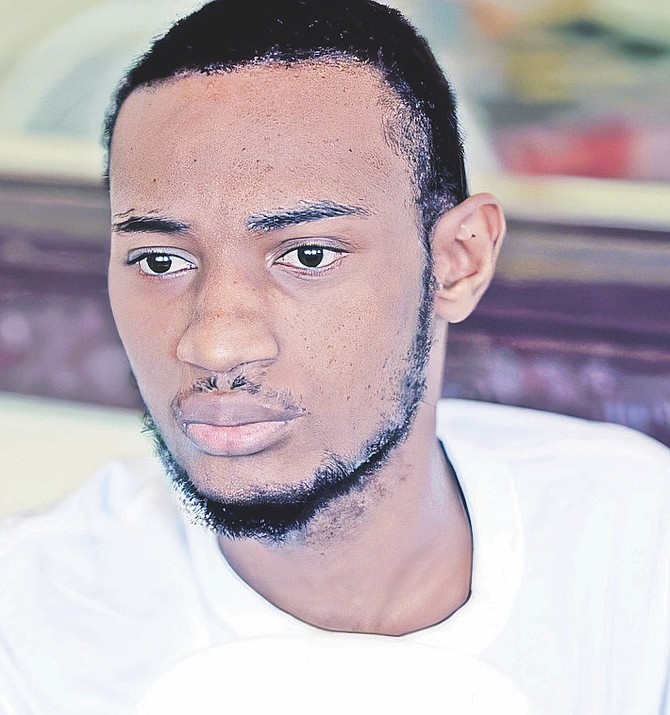
Thorne Clarke
By LYNAIRE MUNNINGS
Tribune Staff Reporter
lmunnings@tribunemedia.net
A MAN left paralysed after being shot in the back by a police officer has secured an $80,000 interim payment from the state after developing a severe pressure ulcer that now requires surgery as the courts continue to determine how much he should ultimately receive for the 2016 shooting.
Justice Camille Darville Gomez ordered the Commissioner of Police and the Attorney General to make the payment to Thorne Clarke, finding that his medical condition created an urgent need for financial relief and that $80,000 was a sufficiently conservative portion of his likely final damages award.
Mr Clarke was 22 when he was shot in the back by a police officer in 2016, leaving him paralysed from the sternum down. He sued the Commissioner of Police and the Attorney General in May 2018, and judgment in default of defence was entered against them in September 2019.
The circumstances of the shooting are unclear. Police said at the time that officers saw a suspicious-looking man enter a Nissan and attempt to drive away. According to the force, officers surrounded the vehicle and ordered the driver out, but he refused and attempted to “knock down” an officer, who opened fire because he feared for his life.
Mr Clarke gave a sharply different account in an interview with The Tribune three months after the shooting. He said he stopped when officers ordered him to do so and questioned why they wanted him out of the vehicle. He said he began driving away after receiving no explanation and had travelled less than ten feet when officers fired at the car, striking him in the back.
Mr Clarke denied attempting to hit an officer and said his legs immediately became stiff after he was shot, leaving him unable to remove his foot from the accelerator before the vehicle crashed into a wall at Windsor Park.
He also alleged that officers dragged him from the vehicle, handcuffed him and assaulted him while he was injured. Police subsequently told The Tribune they were “sticking to their original statement” about the incident.
The amount he will ultimately receive remains unresolved.
Mr Clarke is seeking $2.064m in damages, while the defendants have assessed his claim at $539,250.03. Their figure includes $181,010.03 in special damages and $358,240 in general damages, including $348,240 for pain and suffering associated with his paraplegia, loss of bladder and bowel sensation and loss of sexual sensation.
An assessment of damages was held before Assistant Registrar Jonathan Deal in May 2025, but his ruling remains outstanding.
While awaiting that decision, Mr Clarke developed a severe stage four pressure ulcer on his right buttock, measuring about six centimetres by four centimetres.
The ulcer became infected around April 26, causing an extremely high fever and difficulty speaking. Mr Clarke was admitted to Princess Margaret Hospital for about nine days.
Dr Vernard McPhee, who is treating him at New Hope Medical Center for Advanced Wound Care, recommended surgery to close the wound and reduce the risk of further infection and complications.
The estimated cost of the surgery and aftercare is $57,488.32. Mr Clarke also has an outstanding medical bill of $11,358.89 for previous treatment of the bedsore.
Dr McPhee said the wound would require extensive treatment, including vacuum-assisted wound closure, debridement, suturing, eradication of MRSA infection and possibly reconstruction with a gluteal flap procedure.
The court was told that Mr Clarke has been paying for his treatment out of pocket and has struggled to meet the recurring cost of equipment, labour and medication.
He has also been leaving work at 2pm each day because prolonged sitting increases his risk of infection, according to the ruling. Mr Clarke said the situation had caused anxiety about losing his job, the wound becoming infected again and the prospect of being readmitted to hospital.
Justice Darville Gomez said the medical evidence demonstrated an urgent need for surgery and highlighted the hardship Mr Clarke was facing while awaiting the final damages decision.
Mr Clarke initially sought an interim payment of $200,000, but reduced the request to $100,000 at a second hearing.
The defendants opposed the application, arguing that because the assessment hearing had already concluded and the Assistant Registrar's ruling was pending, an interim payment risked duplicating the damages exercise and creating an overpayment that could be difficult or impossible to recover.
Justice Darville Gomez rejected the argument that the application was procedurally improper merely because the assessment had concluded.
The Civil Procedure Rules, she said, expressly allow an application for an interim payment to be made “at any time”, and nothing extinguished the court's power to act simply because evidence and submissions on damages had closed.
However, the judge accepted that the court had to proceed cautiously to avoid effectively conducting a second assessment of damages or paying more than Mr Clarke was eventually awarded.
She relied on the defendants' own $539,250.03 assessment as the conservative baseline.
A $100,000 payment would have amounted to about 18 percent of that figure, while $80,000 represented about 14 percent.
Justice Darville Gomez found the lower amount struck the appropriate balance, providing meaningful assistance with Mr Clarke's urgent medical costs while leaving sufficient headroom against the risk of overpayment.
She also said the payment did not have to correspond exactly with the present surgical estimate because Dr McPhee had warned that the $57,488.32 figure could change depending on Mr Clarke's condition, recovery and any additional treatment required.
“I am therefore satisfied that $80,000.00 is no more than a reasonable proportion of the likely final judgment,” Justice Darville Gomez said, “and that it is just to exercise the discretion in the Claimant’s favour.”
The $80,000 will be deducted from whatever damages are ultimately awarded.
The defendants were also ordered to pay Mr Clarke's costs for the interim-payment application.
Justice Darville Gomez stressed that her ruling does not determine Mr Clarke's final award and does not restrict the Assistant Registrar's pending decision on damages.




Comments
birdiestrachan 22 minutes ago
No money can replace what was taken away from him he deserves more.
Sign in to comment
OpenID