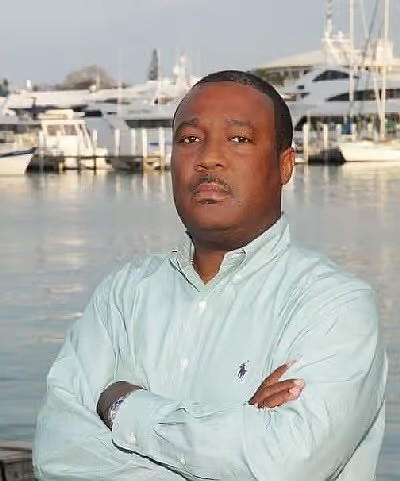
Adrian LaRoda
BY NEIL HARTNELL
TRIBUNE Business Editor
nhartnell@tribunemedia.net
A FISHERIES executive yesterday conceded it will be “a long shot” to get Bahamian lobster and stone crab exports totally exempted from Donald Trump’s 12.5 percent tariff but praised the Government’s bid to have the rate lowered as a “more realistic” goal.
Adrian LaRoda, president of The Bahamas Commercial Fishers Alliance (BCFA), told Tribune Business that he was “excited and encouraged” that the Davis administration is “taking a stand” to address the increased taxation being imposed on exports to the US based on its initial response to the tariff’s imposition at 12.01am on Friday, July 24.
Jomo Campbell, minister of agriculture and marine resources, on Friday unveiled a three-pronged approach the Government plans to take in persuading the US to either completely remove, or lower, the 12.5 percent tariff rate on The Bahamas’ seafood exports. The first involves lobbying for a complete exemption for Bahamian crawfish and stone crab exports, with the former typically generating between $50m-$60m in annual sales and representing a valuable source of foreign currency earnings.
The second element involves persuading the Trump administration to reduce the tariff rate on Bahamian exports from 12.5 percent to at least 10 percent by showing this nation has taken action to ban the importation of goods made by forced labour - the very rationale that the US has used to justify the imposition of such levies on this country and 59 others.
The Bahamas, through reforms to the Customs Management Act that were passed prior to end-June 2026, imposed such a ban on forced labour goods. Six other countries now face the lower 10 percent tariff on their US exports, as opposed to The Bahamas’ 12.5 percent, after enacting similar laws, and Mr Campbell said: “We intend to be the seventh.”
The Ministry of Agriculture and Marine Resources has also promised to work with the Ministry of Finance, Bahamas Customs and this nation’s embassy in Washington to help Bahamian seafood processors and exporters navigate any new US procedures, with Mr LaRoda suggesting that the fisheries sector, other exporters and the Bahamian economy have been caught in wider geopolitical ambitions being pursued by Mr Trump.
He said the US president’s ‘Liberation Day’ tariffs, which imposed a 10 percent levy on Bahamian imports when unveiled with much fanfare last year, did not appear to have been applied to this nation’s fisheries exports even before they were struck down in early 2026 by the US Supreme Court.
The BCFA chief said no local seafood wholesaler or exporter had confirmed their products were subject to the tariff, which is a tax imposed by countries on foreign goods as they enter at the border, adding: “I don’t know of any exporter that said the US importers had to pay an increased 10 percent.”
However, Mr LaRoda said few in the Bahamian fisheries are paying attention to, or have noticed, the Trump tariff threat as the 12.5 percent impact has yet to bite. He added that this might change after August 1, when crawfish season begins and the industry approaches its US wholesale and seafood buyers seeking fresh orders for what will now likely be a more expensive product for American consumers.
Reacting to the Government’s plans for seeking a total exemption for crawfish and stone crab, Mr LaRoda said: “I’m excited and encouraged. That’s good news. I hope the Government is successful in that. Back when I had said the Government needs its lobbyists to go and talk to the US about reducing or removing these tariffs. Hopefully now, the Government is serious enough to look at this and see if it can get some sort of exemption for our seafood products going into the US.”
He admitted, though, that the chances of securing a carve-out or exemption specifically for key Bahamian seafood exports is not high. “I’m an optimist, and while I believe it’s a long shot in having these rescinded, it’s still worth it to go and ask,” Mr LaRoda said. “This is the time when we need lobbyists to go out and make our case with the US government; that The Bahamas is a small country, a friendly nation. Help us out.”
The BCFA chief agreed that the Trump tariffs appear to cut across, and ignore, the previous trade preferences that The Bahamas and other regional nations enjoyed under the US Caribbean Basin Economic Recovery Act (CBERA) and Caribbean Basin Initiative (CBI), which allowed certain of this nation’s exports to enter the US market free of tariffs and other levies and restrictions.
Trade, media and observers have suggested that, in reality, the Trump administration is in effect ‘killing two birds with one stone through these ‘forced labour’ tariffs - getting around the Supreme Court’s strike-out of the earlier ‘Liberation Day’ set while also seeking to deter other countries from importing Chinese-made goods.
They argue that Mr Trump has seized on the 1974 US Trade Act’s section 301 as a stronger weapon to support his tariffs, grounding them on allegations other countries have failed to crack down on forced labour. While the evidence against The Bahamas and others is flimsy at best, these observers say it is almost impossible for other countries to disprove and thus overturn the tariffs that way.
However, US importers have already launched legal challenges against the latest tariffs on the basis that the US has failed to conduct a thorough-enough investigation to make the claims against The Bahamas and 59 other states stand-up. And, on the other side, the ‘forced labour’ justification may also deter other countries from sourcing Chinese-made goods given allegations have been made of such practices involving the latter’s Uighur minority.
Mr LaRoda yesterday argued that The Bahamas and its fisheries industry “cannot rely on the outcome” of US courtroom battles to address the impact of Mr Trump’s tariffs, thus making proactive moves inevitable. He added that The Bahamas and other countries are being used as “footballs” in wider US geopolitical strategy, suggesting the US president is “kind of shaking the tree. I want something, I’m going to shake your tree, bring you to the table so I get what I want”.
The BCFA chief agreed that securing a reduced 10 percent tariff rate, on the basis that The Bahamas has already amended its laws to combat forced labour, is a more achievable goal. “That’s more realistic,” he told Tribune Business. “I’m happy to see the Government thinking along those lines. I’m confident that will be the greater consideration.
“It’s better to get something in that regard than walk away without getting anything because that weakens your position when it’s time to negotiate again. I think that will be the better approach, and when we show our laws are fighting against forced labour, that will be the right consideration.
“We have to look out for ourselves and protect ourselves, and cannot rely on the outcome of a US legal challenge. I think the Government is doing it the right way by approaching the US and have this looked at again,” Mr LaRoda added. “I’m encouraged they are doing it, I am encouraged they are taking a stand.”
Asked what the fisheries industry reaction has been to-date, he said: “Unfortunately, a lot of people haven’t realised the potential impact because we have not seen the hurt. If it stays in place at 12.5 percent we will begin to see the impact after next week when the crawfish season opens and we approach buyers and wholesalers on the export side. Unfortunately, fisheries has not been overly concerned to this point, and we should be….
“The few seafood wholesalers I have spoken to have not heard from the Government. At this point, it would be good moving forward if the minister or Department of Marine Resources could have wider consultation on how we move out of this thing. Anything to protect our industry is good for all of ud, not just those industries impacted by this; it’s good for the whole country. It was good that the Government would have considered doing this.”




Comments
Use the comment form below to begin a discussion about this content.
Sign in to comment
OpenID