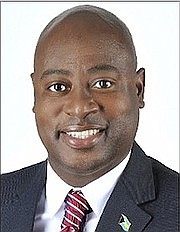
Leonard Sands
BY FAY SIMMONS
TRIBUNE Business Reporter
jsimmons@tribunemedia.net
THE BAHAMIAN Contractors Association’s (BCA) president yesterday urged the Government to develop workplace safety standards tailored to the realities of the local industry rather than adopting US benchmarks wholesale.
Leonard Sands argued that a Bahamian framework would be more practical, affordable and enforceable than simply adopring the US Occupational Safety and Health Administration (OSHA) regulations template.
He added that while the US OSHA offers sound principles, The Bahamas must create its own laws, policies and procedures that reflect the country's size, level of development and construction environment.
"OSHA does not have jurisdiction in the Commonwealth of The Bahamas," said Mr Sands. "While it provides good principles to follow, what is more important is that we create the laws, policies and procedures needed to protect workers in The Bahamas."
His comments come as the Department of Labour ramps up enforcement of workplace safety rules amid ongoing efforts to strengthen occupational health and safety legislation.
Earlier this month, labour inspectors halted work at four construction sites in western New Providence after uncovering serious safety violations, including workers operating at heights without proper fall protection.
Mr Sands said the Association supports improving safety standards but cautioned against simply importing US regulations that were developed for a much larger and more industrialised economy.
"You cannot adopt OSHA certification in whole because many of the standards simply do not fit our environment," he said. "We don't have skyscrapers, and we don't have the same industrial facilities or agencies that dictate many of the standards OSHA requires."
Instead, Mr Sands argued that The Bahamas should develop standards appropriate for a developing nation.
"It's important for us to develop our own standards because we're a developing nation," said Mr Sands. "The United States has been developing its systems for centuries, while The Bahamas is only 53 years-old. We're simply not in the same place."
The BCA president also warned that adopting standards beyond what the local industry can reasonably sustain would drive up construction costs ultimately borne by consumers.
"We have to be careful," said Mr Sands. "Let's make it practical and create a standard that The Bahamas can afford to maintain. We don't want to push safety requirements in a direction that becomes impractical because the costs associated with maintaining those standards are ultimately passed on to consumers."
Mr Sands said the BCA is focused on helping the Department of Labour develop construction-specific policies, noting that the Association's expertise lies in ensuring work sites are operated safely and consistently across the industry.
"We are concerned with the construction policy," said Mr Sands. "It's a lot of work to develop what we believe would be an adequate policy covering construction sites, workers and everything related to maintaining a safe construction environment."
While the BCA's work is centred on construction, Mr Sands said the wider Health and Safety at Work Act extends far beyond the industry and will ultimately affect virtually every workplace in The Bahamas.
"I think the public is unaware of the gravity of the Health and Safety at Work Act because it isn't called the Health and Safety in Construction Act," he said. "It speaks to every place of work."
He added: "You're talking about policies for every workplace where you work - hairdressers, restaurants, law offices, doctors' offices, accounting firms, food stores. Every workplace falls under it."
Mr Sands said the BCA will continue working with the Department of Labour, engineering organisations and electrical industry representatives on construction-related matters to help develop practical safety standards for the sector.




Comments
Use the comment form below to begin a discussion about this content.
Sign in to comment
OpenID