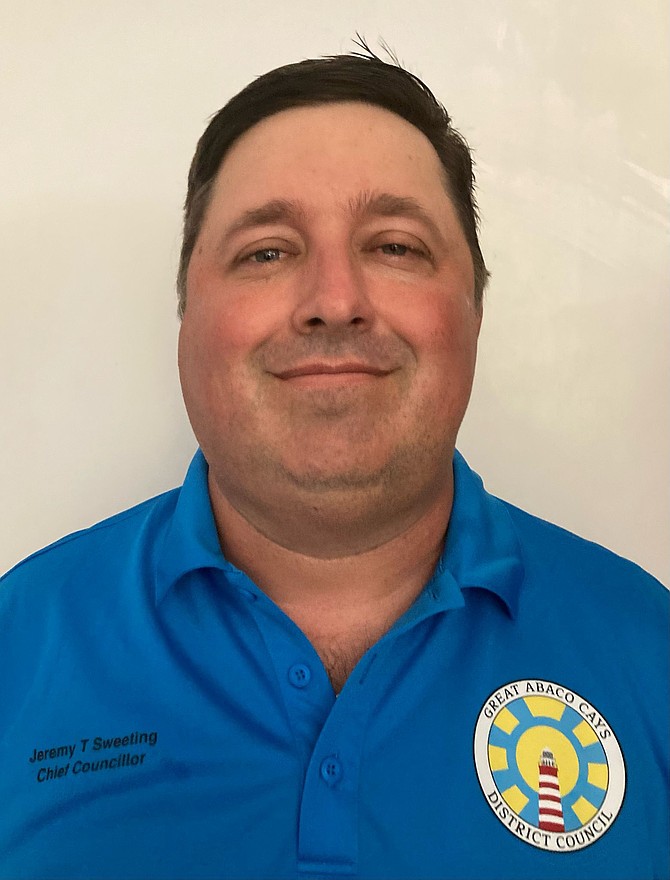
Mr. Jeremy Sweeting
By FAY SIMMONS
TRIBUNE Business Reporter
jsimmons@tribunemedia.net
HOPE Town’s chief councillor has revealed that local authorities are still unable to enforce the collection of fees almost two years after the Local Government Act was passed.
Jeremy Sweeting called for the implementation of local government fee-collection powers under the Act, stressing that Family Island councils remain hampered by a lack of funding nearly two years after the legislation was passed.
He added that the inability to enforce fees, which he described as one of the bright spots of the Local Government Act, was preventing councils from generating much-needed income that could finance projects and improve services in their communities.
“The Local Government Act was passed in 2024, and up until now, we still haven't been able to enforce the collection of local fees. That's been almost two years since it was passed,” Mr Sweeting said.
“The big thing with local government is lack of funding. There's never enough funding to get things done in our communities. If we could get better central government grants for our budgets, or collect local fees, then we would be able to serve our constituents a lot better.”
His comments come as Clay Sweeting, minister of works and Family Island affairs, has proposed giving greater autonomy to local government districts that demonstrate strong performance and responsible fiscal management as part of a broader push to strengthen local administration.
Mr Sweeting welcomed the minister's proposals, noting councils that demonstrate their ability to deliver services and govern effectively should be entrusted with greater responsibility.
“Local government councils that can show they are up to the task of delivering services to their districts and governing well at a local level should be given more responsibility,” he said.
However, Mr Sweeting said the success of efforts to expand local government responsibilities will also depend on recognising the differing needs of individual islands and districts.
He backed the development of district-specific road maps, arguing that a uniform approach to local government will not adequately address varying circumstances across the Family Islands.
“A one-size-fits-all approach doesn't work for local government, because what might be practical in the Great Abaco Cays District may not necessarily work in Mayaguana. What works well in South Eleuthera may not work so well in Andros,” Mr Sweeting said. “It definitely needs to be looked at from the perspective of each island having its own roadmap.”
At this week’s Local Government conclave, Mr Sweeting also called for expanded responsibilities for island administrators, who he said should become the principal co-ordinators of government services in their districts rather than simply referring problems to Nassau.
Mr Sweeting also proposed that all 33 local government districts develop individual District Development Plans shaped by residents' priorities, with budgets aligned to those plans.
He said the districts are expected to identify three immediate priorities, one existing practice to discontinue and one new initiative to introduce, with those commitments forming the basis of initial development plans over the next 100 days.
Mr Sweeting said he is looking forward to engaging with the minister, other chief councillors, local government practitioners and island administrators to discuss the proposals and the future of local administration.
He added that the discussions will provide an opportunity to better understand the minister's plans for giving districts greater autonomy, and to collaborate on improving local government services.




Comments
Use the comment form below to begin a discussion about this content.
Sign in to comment
OpenID