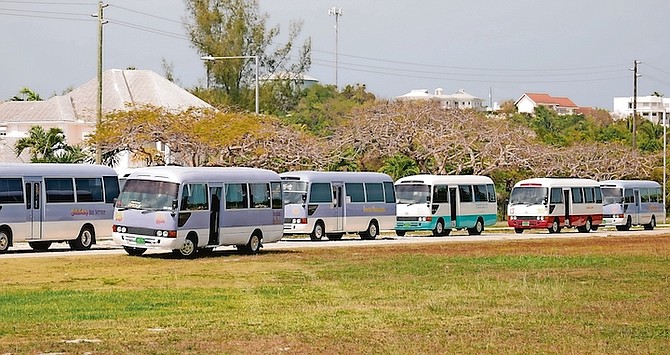
Jitneys near Super Value in Winton.
By LYNAIRE MUNNINGS
Tribune Staff Reporter
lmunnings@tribunemedia.net
ADULT bus fares will rise from $1.50 to $2 on January 1, after Cabinet approved the increase that bus operators have demanded for years as fuel, insurance and maintenance costs climbed.
Fares on extended routes will rise to $2.50, but high school students will see their fare cut from $1.25 to $1. Senior citizens will pay $1 and primary school students will keep their 50-cent fare.
Transport Minister Leon Lundy announced the new fares yesterday. He said they will take effect once they are gazetted, and that January 1 was chosen to allow time for that process.
He said the new fare structure was meant to put operators on firmer financial footing without passing extra costs to vulnerable passengers.
"The generation that built the country will not be asked to pay more to move through it, and no Bahamian family should have to weigh the cost of getting a child to school," Mr Lundy said.
He said senior citizens often rely on fixed incomes, and students depend on the adults around them to get to school.
He also said operators must now deliver more in return. Commuters should be able to board buses that are clean, safe and roadworthy, he said, driven by people who obey the law and treat passengers with respect.
The increase is the second in less than three years, after more than a decade and a half with no change. In 2024, the government raised the adult fare by 25 cents to $1.50, the first rise in 16 years. Operators immediately called it too little. A second increase they expected never came.
Bus drivers' unions have been pushing for a $2 adult fare since at least 2022. Operators have said they were effectively running at a loss as diesel, insurance premiums and parts costs climbed. Last month, the Bahamas Unified Bus Drivers Union threatened industrial action as diesel prices approached $10 a gallon. Drivers staged a sick-out to draw attention to their finances.
Mr Lundy rejected suggestions that the government was forced into the deal. He said he keeps an open-door policy and had met operators to hear their concerns.
Bahamas Unified Bus Drivers Union President Rudolph Taylor said the announcement was the result of a long effort to have operators' concerns addressed. He thanked Mr Lundy for meeting the union and working towards an agreement. He said the union hoped to keep an open line of communication with the ministry, not only during disagreements but also when there was progress to report.
United Public Transportation Company President Harrison Moxey called the announcement an important moment for the industry. He acknowledged that the increase would hit passengers but said operators understood their responsibility to the travelling public, and would work to ensure commuters get better service for the extra money.
He warned drivers who ignore industry standards that the industry would work with the minister to remove irresponsible operators.
Mr Moxey said the fare deal was a first major step in an ongoing partnership with the ministry, not a resolution of every concern. A committee will be set up to examine outstanding issues, including proper bus stops, industry regulations and dress codes.
Mr Lundy said the ministry was reviewing public bus routes because communities have expanded and people's travel needs have changed. The review is guided by population density and passenger demand. He said revised routes would be announced shortly.
He also said the government is studying how other Caribbean countries and international jurisdictions have modernised their public transport systems, including the laws that made those changes possible. The aim is to develop a pilot programme suited to Bahamian roads and commuters.




Comments
Use the comment form below to begin a discussion about this content.
Sign in to comment
OpenID