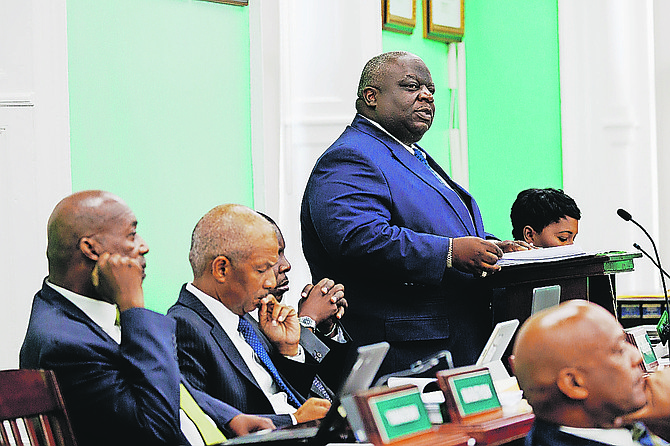
Leon Lundy Photo: Dante Carrer/Tribune Staff
By ANNELIA NIXON
TRIBUNE Business Reporter
anixon@tribunemedia.net
BAHAMIANS yesterday voiced mixed reactions to a 33 percent increase in adult bus fares, from $1.50 to $2, that is due to take effect on New Year’s Day 2027 while high school students will see their price reduced to $1.
The changes, announced by Leon Lundy, minister of transport, following an intense lobbying effort by jitney drivers, owners and operators, who argued that the increase is vital to the industry’s financial survival, will also see fares on so-called ‘extended routes’ increase to $2.50, while senior citizens will retain their $1 fare and primary school students will continue paying 50 cents.
While some commuters said they understood the increase was necessary to offset rising fuel and other operating costs, others warned the additional expense will further strain household budgets, particularly for workers whose salaries have remained unchanged.
Mary Sweeting, a frequent bus rider, said she supports the increase, arguing that the dispute over fares had gone on for too long. “I don’t mind paying the $2,” she said. “If that’s going to make them happy, then make them happy. That strike hurt me. That hurt me. I was supposed to go out those couple of days and couldn’t even go.”
Ms Sweeting said the increase will not create a significant financial burden for her because she typically sets aside more than she needs for transportation. She also welcomed the decision to reduce fares for high school students, adding that rising fuel prices and other costs have not been matched by increases in wages.
Florence Mackey, another bus passenger, also supported the increase, saying operators deserve higher fares given the rising cost of goods and services. She added that the new fare will not significantly affect her finances, arguing that public transportation is less expensive than maintaining a private vehicle.
However, Andrea Smith said the additional 50 cents each way will place further pressure on commuters already struggling to meet daily living expenses. “Sometimes you can’t even find the $1.50,” she said. “So $2 going, $2 coming back, that’s still rough. That’s $4 versus $3. That’s a dollar more. And your salary remains the same.”
Ms Smith said the increase will affect commuters across the board, although she believed a smaller adjustment to $1.75 would have been more manageable. “It will impact everybody, and it’s going to be rough on the pocket,” she said. “I would have said $1.75, but hey, it’s not too far from $2.”
Announcing the changes, Mr Lundy said the new fares are intended to provide bus operators with greater financial support as fuel, insurance, parts and maintenance costs continue to rise.
“Fuel, parts, insurance and maintenance have all grown more expensive,” Mr Lundy said. “A bus that is not maintained cannot be relied upon. These new fares give our operators firmer footing, and with that footing comes a firm expectation.”
He said passengers paying higher fares should expect cleaner, safer and more roadworthy vehicles, drivers who obey the law and show respect, and transportation services that adequately reach communities where people live and work.
Mr Lundy said the Government is also completing a comprehensive review of bus routes, taking into account population density and passenger demand, with revised routes expected to be announced shortly.
“Public transport must follow the people, and under this government, it will,” he said. Mr Lundy added that the Government is developing a pilot programme aimed at modernising public transportation in The Bahamas, with officials studying systems in other Caribbean countries and international jurisdictions to determine which models could be adapted to local needs.
The new fares will take effect on January 1, 2027, as Mr Lundy said the changes must first be gazetted following Cabinet approval.
“It just passed through Cabinet, and now it has to be gazetted and passed through,” Mr Lundy said. “So we know it’ll take a few weeks, and we wanted to give a firm date that we know for sure it would be able to start.”
The fare announcement was welcomed by representatives of the jitney industry, who described the adjustment as the culmination of a lengthy push for higher fares.
Rudolph Taylor, president of the Bahamas Unified Bus Drivers Union (BUDU), thanked Mr Lundy for engaging with operators and following through on his commitment to address their concerns. He said the union wanted to maintain an open line of communication with the Ministry of Transport to address any challenges that arise as the changes are implemented.
Harrison Moxey, president of the United Public Transportation Company (UPTC), also welcomed the announcement but acknowledged that passengers will have to absorb higher transportation costs.
“We understand what it means for the increase,” Mr Moxey said. “To some of you, you are our customer base, and we are pledging to you today that it’s not just about the money, to get the money and run.”
He said operators will work to improve public transportation and ensure passengers can travel safely and confidently. Mr Moxey also warned that the industry intends to work with the Ministry of Transport to address misconduct by rogue operators, arguing that public safety must remain the priority.




Comments
Use the comment form below to begin a discussion about this content.
Sign in to comment
OpenID