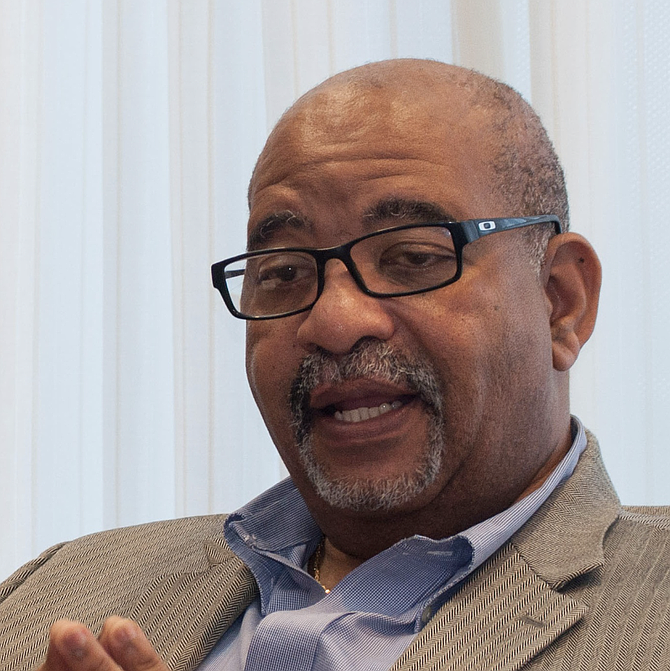
Larry Gibson
By NEIL HARTNELL
TRIBUNE Business Editor
nhartnell@tribunemedia.net
INCREASED costs “may be a small price to pay” for greater regulatory protection of The Bahamas’ $1.5bn private pensions if it helps prevent future City Markets-type debacles, financial executives are asserting.
Larry Gibson, recently retired as chief operating officer of CG Atlantic Pensions, told Tribune Business he “fully supports” the Securities Commission’s drive that pension schemes where employees contribute to their own retirement savings be mandated to hire an investment manager licensed and registered by the regulator.
The capital markets regulator, in its public consultation on the issue, conceded that requiring an independent investment manager could impose increased fees and costs on pension plan participants, but Mr Gibson asserted this would be worth ensuring there is increased “protection” for the retirement savings of thousands of Bahamian workers and their dependents.
He told this newspaper that such a step would prevent potential conflict of interests that arise when companies manage the very pension schemes they create and sponsor on behalf of their staff. The Securities Commission, in its discussion paper, said this could result in the company investing plan assets into its own business and/or real estate, as well as the commingling of pension and operational funds and their concentration in just one or two assets.
These concerns were brought into focus with the collapse of the City Markets supermarket chain in 2012. The employer-sponsored pension plan for its staff was largely invested in the food retailer’s former head office on the East-West Highway, and long-suffering employees have been fighting in the Supreme Court for more than a decade in an as-yet unsuccessful bid to access their retirement income.
Mr Gibson said most Bahamian private pension plans already use independent managers and administrators to provide an extra level of expertise and safeguards, and added: “There are just a few legacy plans that only do it in-house. That’s where we have gotten into trouble. They don’t make the payments on time, make loans back to the company.
“Doing that [the Securities Commission’s consultation], it’s a good thing. It really is. If it was a licensed administrator or manager, that would really impose or force best practices on the whole industry. The answer, I think, is yes, but also where there’s a plan that’s a contributory plan on behalf of employees, those plans should be registered as well.”
The ex-CG Atlantic chief said that ensuring Bahamian private pensions are managed and administered by licensed, regulated entities, which can be held “accountable” to “rules and regulations, should suffice”.
As to the increased fees associated with investment managers and administrators overseeing pension assets, which would almost certainly result for plans that currently lack such structures and have to be shared by participating workers, Mr Gibson told Tribune Business: “For the protection it brings it may be a small price.
“Look at City Markets and stuff like that. I drove past that [building] on the weekend and I just shed a tear. All the people’s pension money went into that building. At least if it was a licensed and regulated investment manager there are checks and balances.
“I support it. I support it fully. I think it’s a step in the right direction, and also they should go further with the private pensions, and have separation between the employer sponsor and plan assets and the use of funds.”
The Securities Commission’s consultation paper made clear it was only dealing with the issue of whether licensed, regulated investment managers should oversee private pension plan assets. It does not address the issue of whether private pensions should be regulated or, indeed, that it become mandatory for all companies to offer them to staff.
Asserting that those issues were “a matter of public policy” that should be determined by the Government and Parliament, the regulator noted that while the latter debated the Employees’ Pension Fund Protection Bill 2012 at a second reading it was never moved forward or became law.
Mr Gibson challenged why nothing has been done to advance the Bill, or some form of pension legislation, for the past 12-14 years. “Why don’t we get on with the friggin’ legislation,” he asked, “rather than biting off a part or dancing around it?”
He was backed by David Slatter, RF Bank & Trust (Bahamas) vice-president of investments, who told Tribune Business that “we’ve been pushing for pension legislation for more than 30 years now and to no avail” when it comes to protecting workers’ “hard-earned money”.
Noting that jurisdictions such as the US, Canada and the Cayman Islands offer such legal protections, he added: “My view is that it’s very important we have good pension legislation in place. It’s essential. I fully agree. We need to make sure people’s pensions are fully safeguarded. We’ve been trying to get pension legislation put in place for 30-odd years. I agree that it’s critical to ensuring we have proper safeguards.
“If entities that are regulated by the Securities Commission manage these funds it makes sense. The Commission will have ongoing oversight of those entities and can take steps if those entities are not in compliance or conduct themselves in a manner that is not appropriate. They can take steps before anything major happens.”
The Securities Commission, in its consultation paper, said: “Private pension plans in The Bahamas hold more than $1.5bn of retirement savings. Employers establish and offer private pension plans voluntarily, not under any legal requirement, and there is no legislation dealing specifically with how they are established and operated.”
It added that the Central Bank, in its last survey of private pensions conducted in 2017, found that such plans covered 52,363 persons or some 25.7 percent of the workforce - mostly in hotels and restaurants. They were invested “conservatively”, with 44.7 percent of total plan assets invested in government securities that deliver a fixed rate of return.
“An earlier Central Bank survey found that about 29 percent of plans, holding about one quarter of assets, were managed in-house by the sponsoring employer in 2007,” the Securities Commission said. “Following the 2008 financial crisis, the Government reported that private pension assets fell from just over $1.1bn in 2007 to about $675m in 2011, as workers who lost their jobs withdrew their savings.”
Turning to the question it has sought feedback on, the Securities Commission said participating workers have a portion of their salary deducted as pension contributions but “do not usually choose the investments, cannot readily move their savings and rely on others to look after the money for many years:.
Among the risks created by companies managing and investing pension plan assets on behalf of employees, the regulator added, are “conflicts of interest where scheme assets are invested in the employer’s own business or property, or used for its benefit”.
The Securities Commission identified other issues as including investment and asset concentration, “where much of a scheme’s value rests on one or two assets”, and who has custody of pension plan funds so they are “held separately from the employer’s own”. A further concern is “limited reporting, where members learn little about how their savings are invested and valued”.




Comments
Use the comment form below to begin a discussion about this content.
Sign in to comment
OpenID