The KDK Report
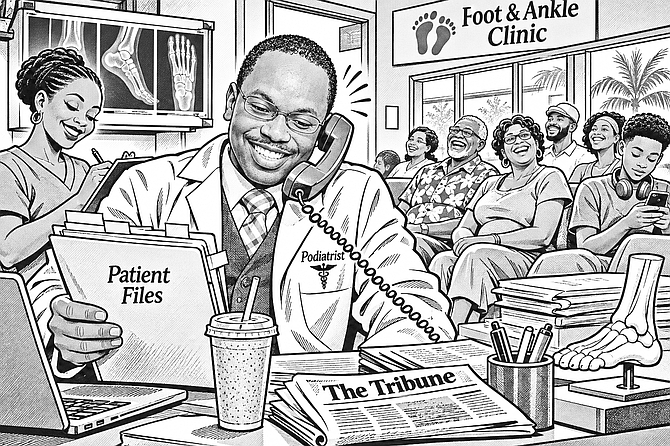
Many patients ask me what I love most about being a foot and ankle surgeon and I always respond that I never quite know what will walk through my door or where the conversation will lead. This week, I thought I would take you through an ordinary day in my practice with all the interruptions, encounters and small satisfactions that make that answer worth explaining.
An ordinary Monday for me begins at half past four. I initially remain still, wishing I had a few more moments of rest, but reluctantly get up, move fast before I change my mind, get ready and head to the gym. Today is cardio day so I say multiple prayers to carry me through. Exhausted but glad I forced myself to work out, I return home, make a smoothie and get ready for work. Here is where I confess: making a smoothie is the top end of my kitchen skills. I have yet to turn on the stove in my house though I have lived there for a few years now and can only assume it works fine. I have no hesitation performing the most intricate surgical procedure, separating foot muscles and ligaments, for instance, from a neighboring blood vessel or nerve but hand me an onion and a knife and all I can do is stare.
Before heading into my office, I stop at the pharmacy in the plaza where I practice and purchase a copy of The Tribune newspaper. Reading it will occupy the small intervals the day permits and should those intervals prove generous, The New York Times waits on my phone. Gina, my office manager, is scheduling a new patient when I arrive. Kara, my medical assistant, is preparing the main treatment room. They glance up, say good morning and return to their respective tasks. I log into the medical system and unfold the newspaper just as the doorbell rings.
My first patient has gout. He hobbles into the office and my heart goes out to him. His left big toe is swollen and incredibly tender and he describes his pain as utterly intolerable as he winces at the thought of me examining the area. I prescribe a medication, discuss foods to avoid and refer him for bloodwork then return to my desk to document the visit. I empathise with him and the pain he is enduring and make a note to check up on him later in the week.
Partway through, Gina tells me a pharmaceutical med-rep has called to request a meeting. Before we settle on a time, Kara announces that the next patient is ready. I finish the sentence I’m typing and leave the note open. This patient has heel pain and says that her first steps out of bed are so painful that they force her to walk like her late grandmother. We discuss her symptoms, I examine her foot, take X-rays, watch her walk, then look at her footwear. Her number one request is to get through the working day comfortably. I go over her treatment plan and explain how it should help relieve her pain.
Back at the computer, I finish the gout note before beginning hers. The phone rings again. A patient wants to know whether Brooks sneakers are better than Nike for her foot type. I ask Gina to take a message. Another caller hopes I can make a house visit to see her 90-year-old father. I give Gina the information she needs to respond, then turn back to the heel-pain note.
Soon enough, Kara is at the door. The ankle injury is ready. This patient is visiting from a family island. She was cleaning her home when she fell and twisted her ankle. We review the X-rays together. She has a non-displaced fracture that will heal with rest and a CAM walker boot for ambulation but the conversation quickly turns towards work, transport and the disruption of getting through the week. She is a single mother and her treatment plan must fit into a life that was already complicated before her bone broke.
I complete the heel-pain note and begin documenting the fracture. Halfway through, Gina calls about a light that will not come on at our Palmdale office. I add it to my list, alongside the air-conditioning service that needs scheduling. Then Kara calls. The next patient has completed his form and is ready.
Out front, a late arrival overlaps with someone whose appointment is tomorrow. The walk-in hopes to be accommodated so Gina revises the schedule while Kara gets them seated. The flow remains smooth and together, they bring order to the controlled chaos of an ordinary morning.
My next patient has diabetes and a wound on his foot that he can barely feel. His blood sugar is often over 300, although he tells me that he only eats salad and drinks plenty of water. We discuss how Diabetes effects the feet before I treat his wound and document his visit. Then I reach for the newspaper. I find the paragraph where I left off just as Gina brings another message. A patient wants to know whether a ‘light cocktail’ this evening at dinner would be permissible with her medication. I set it aside for a return call.
A little later, a patient who is overweight arrives with swollen ankles. She, too, tells me that she only eats salad and she can’t exercise even if she wanted because her painful feet would make it difficult. Her job requires her to stand all day and she can’t afford to take time off because financially things are tough.
Between visits, I arrange the Palmdale service, check which medical supplies need reordering and call in a prescription refill for my aunt. I also call my sister to ask whether my niece’s cold has improved. Then Kara comes for me again, and the unfinished supply order waits.
This patient has bunions and hammertoes and is considering surgical intervention. Her shoes are narrow, with little cushioning or arch support. I place one beside her bare foot. She smiles as we consider the discrepancy, and we discuss how a more accommodating shoe might help. Back at my desk, I complete the preceding note before starting hers, finish the supply order and return the sneaker call. A headline on my phone briefly draws me into The New York Times but I only get as far as the opening paragraph.
The afternoon brings nurses, teachers, hairdressers, housekeepers, construction workers, croupiers and law enforcement officers. Their aching feet tell something of what it takes to keep Nassau functioning. Several more patients follow, seeking treatment for corns, fungus, fractures and ankle sprains. As I work, our conversations move through their lives, local and international politics, and television shows we recommend with varying degrees of enthusiasm.
Among the afternoon’s familiar faces is a patient returning for follow-up, pleased to report that her pain has nearly resolved. Our conversation picks up where it last left off as she mentions how her recent family trip went and meeting her daughter’s boyfriend for the first time. I dispense a pair of orthotics and we discuss the final steps in her recovery. These visits bring a particularly deep sense of satisfaction.
My last patient is a little girl with an ingrown toenail. She screams before I touch her, certain that a needle is imminent. I pause and show her my empty hands. After a day spent trying to catch up, I must now proceed at the pace of a frightened child. And once again, I am reminded that the role of a physician is not confined to medicine. Sometimes, the most important moment comes in the calming of fears or the confidence you instill in a patient who needs a reason to hope.
When the visits are over, I finish the remaining notes and return the calls requiring my attention, including the question about the cocktail. I then write a letter requesting that a patient be allowed to wear orthopedic shoes at work during her recovery, followed by a treatment summary for another patient whose insurer is refusing to cover her bill despite having granted preapproval. I finish reading the newspaper, lock up far later than intended, say goodnight to security and stop for fruit for tomorrow’s smoothie.
In the grocery aisle, a patient heading home from work spots me. She quickly tries to conceal both her feet and her trolley. Without saying anything we both laugh. After a stop for gas, I get home, shower, update my accounts and return emails. I watch some news and a recap of the weekend’s Formula One race.
Outside, I hear the rain begin again. So much of life passes this way, through hours crowded with responsibilities that we rarely pause to consider. We work, find something to laugh about and arrive home tired. But in the quiet of the night, we realize how much those familiar routines mean to us. I end the day grateful for the people who gave it meaning, and hopeful that another ordinary tomorrow will offer me the distinct privilege of doing it all again.
This is The KDK Report
• Nicknamed ‘The Prince of Podiatry’, Dr Kenneth D Kemp is the founder and medical director of Bahamas Foot and Ankle located in Caves Village, Western New Providence. He served as the deputy chairman for the Health Council for five years and he currently sits on the board of directors for the Princess Margaret Hospital Foundation in his role as co-vice-chairman.




Comments
Use the comment form below to begin a discussion about this content.
Sign in to comment
OpenID