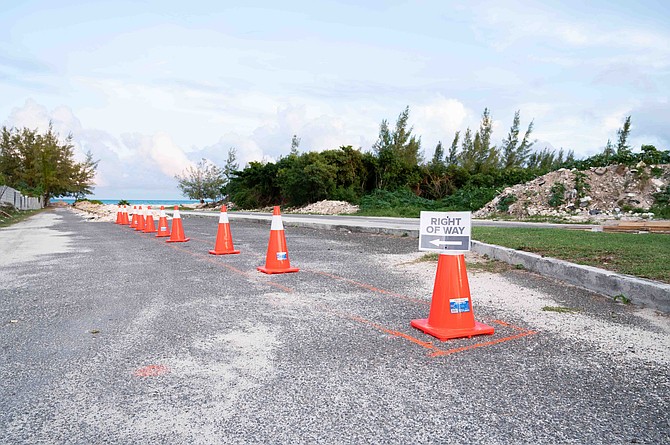
A boundary wall is being constructed near Stokes Beach in Yamacraw.
By LYNAIRE MUNNINGS
Tribune Staff Reporter
lmunnings@tribunemedia.net
BEACHES and Parks Authority chairman Jamal Strachan has defended construction of a boundary wall near Stokes Beach in Yamacraw, insisting Bahamians will retain access to the shoreline despite concerns that the development could restrict public access and claims that work was halted because the developer lacked environmental clearance.
Mr Strachan said the Ministry of Works had issued a valid permit for the construction, explaining that the property owner was seeking to build a wall along a corrected property boundary after an error was discovered in an earlier survey.
“It’s not a privatisation of any access,” he said.
His comments follow the circulation of a video showing heavy machinery excavating land near the shoreline, prompting questions about whether the development would prevent Bahamians from reaching the beach.
Mr Strachan acknowledged that the existing access route might have to be adjusted to accommodate the wall but maintained that a route to the shoreline would remain available.
Asked whether officials would ensure that public access was preserved, he replied: “Yeah, the access is there.”
He said the road or access point could be shifted to allow the property owner to build along the corrected boundary without preventing people from reaching the beach.
However, beach access advocacy group Dis We Beach said construction of the wall had been halted following concerns about its safety and the absence of environmental clearance.
The group said it had spoken with the property owner and learned that the wall was intended to extend to the high-water mark, raising questions about the implications for people using the beach.
According to Dis We Beach, Yamacraw MP and Environment Minister Zane Lightbourne had also expressed concerns about the proposed wall's safety.
The group claimed that although a permit had been issued, the developer had not obtained clearance from the Ministry of the Environment, which it said was required before construction could proceed.
It said the ministry subsequently intervened to halt work on the boundary wall.
The Tribune has sought to establish the circumstances surrounding the approvals, including whether the necessary environmental clearance was obtained and the current status of construction.
Dis We Beach said it initially visited the property after learning of the work, spoke with security personnel and left its contact information for the developer in hopes of discussing the plans.
The group confirmed that an existing access point remained unobstructed during its visit but said it wanted assurances that the development would not interfere with public access in the future.
It subsequently reported speaking directly with the property owner, who it said was willing to discuss concerns about the wall's safety. The dispute comes amid longstanding concerns about public beach access in The Bahamas, where disagreements over private property boundaries and coastal development have repeatedly raised questions about Bahamians' ability to reach the shoreline.
Dis We Beach argued that the Yamacraw situation demonstrated the need for legislation explicitly protecting public access to beaches by land.
“This is precisely why clear, enforceable national beach access legislation matters,” the group said in a Facebook post.
“Access to the public foreshore must mean more than being able to reach it by sea. Bahamians must have protected, practical access by land, too.”
The group also said it had contacted Adrian White for comment and would provide further information as its enquiries continued.




Comments
Use the comment form below to begin a discussion about this content.
Sign in to comment
OpenID